


By Logan Collins, Farm Manager
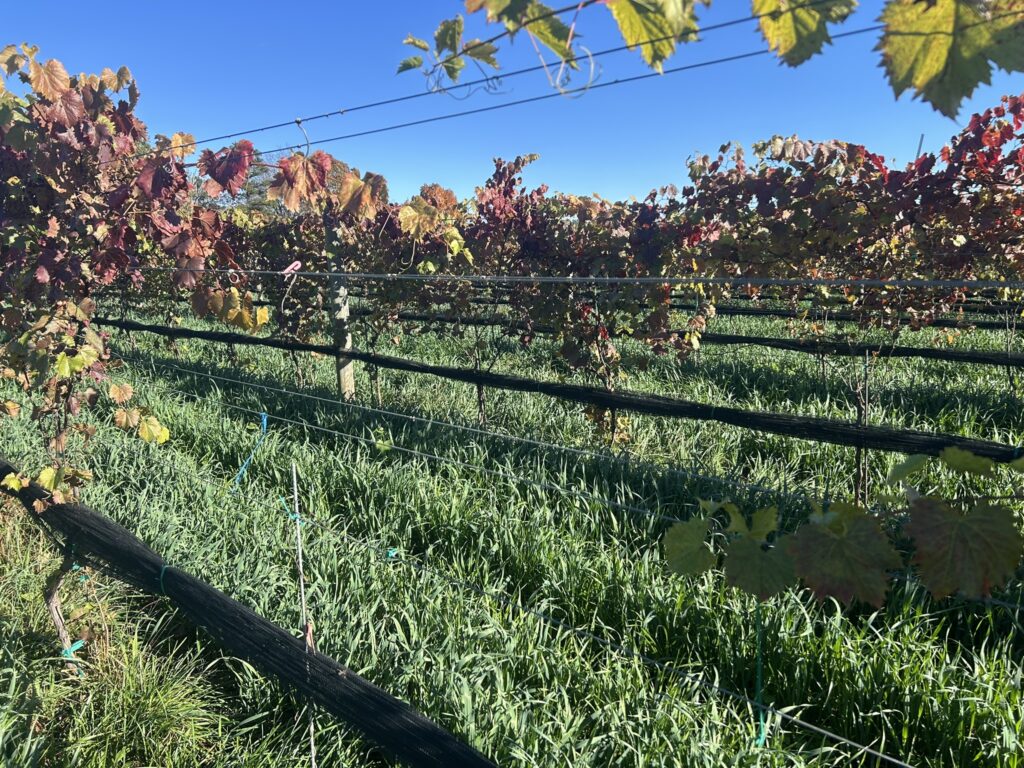
End of August to now… We ended the season with a heavy application of farm made compost, followed by incorporation, and finally seeding of a service crop of annual rye, crimson clover, and black oats. We’ve made huge leaps this year with plant and soil health that have culminated in strong plants keeping their leaves and actually going through senescence to reach dormancy instead of being defoliated by disease/stress.
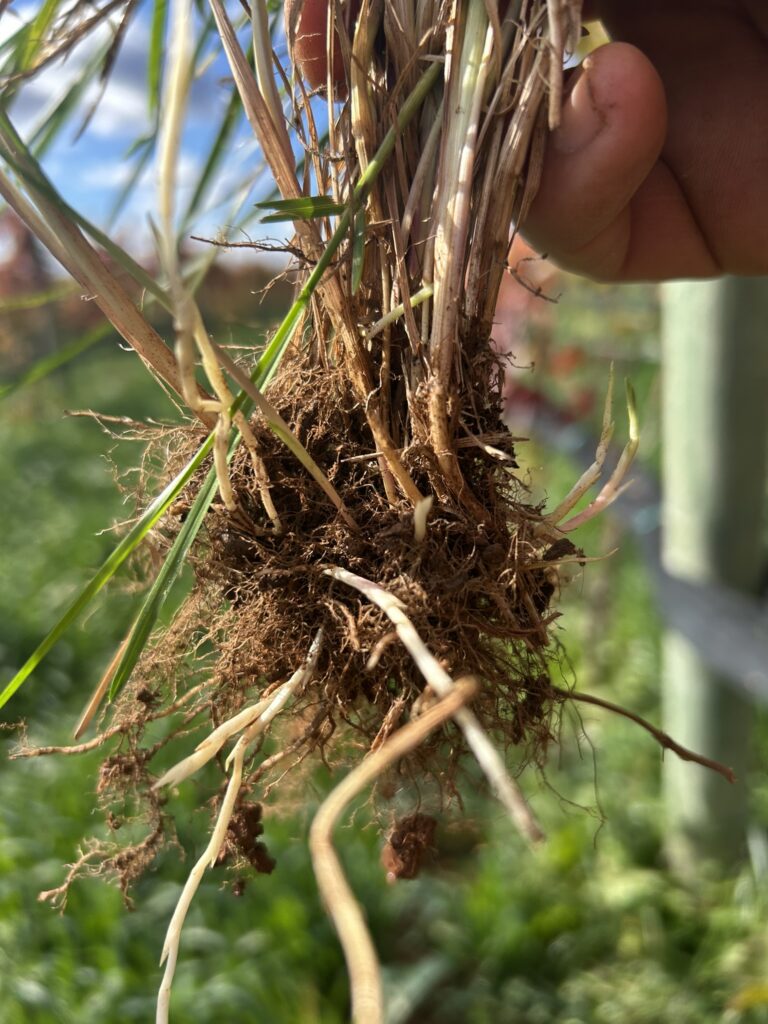
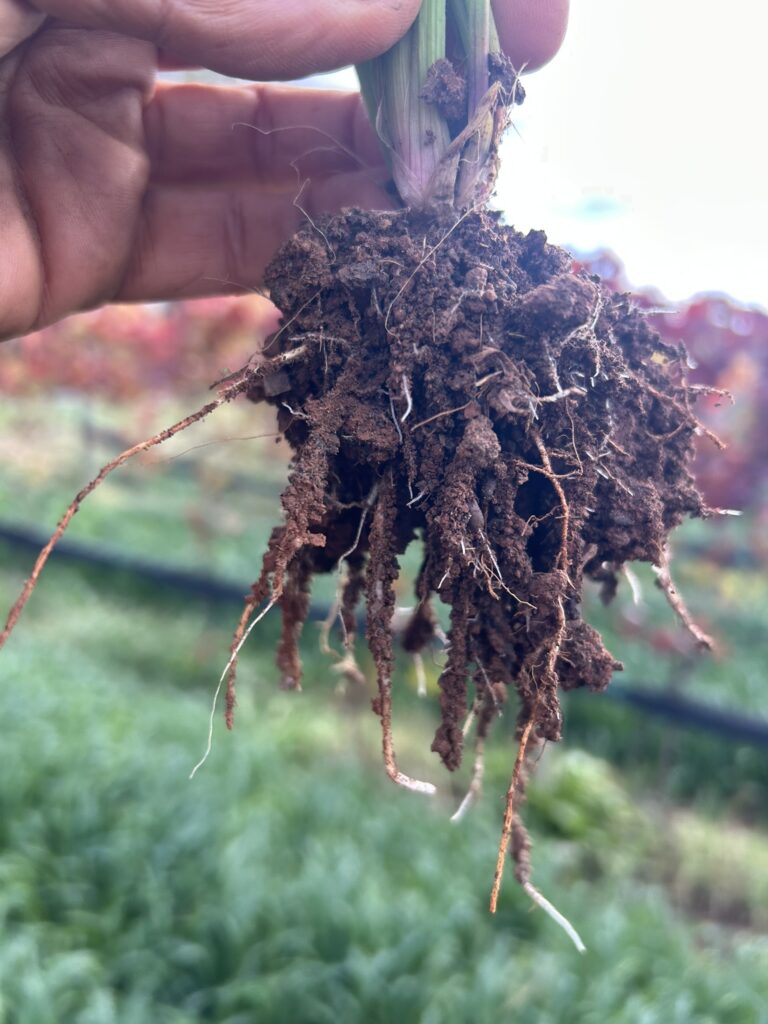
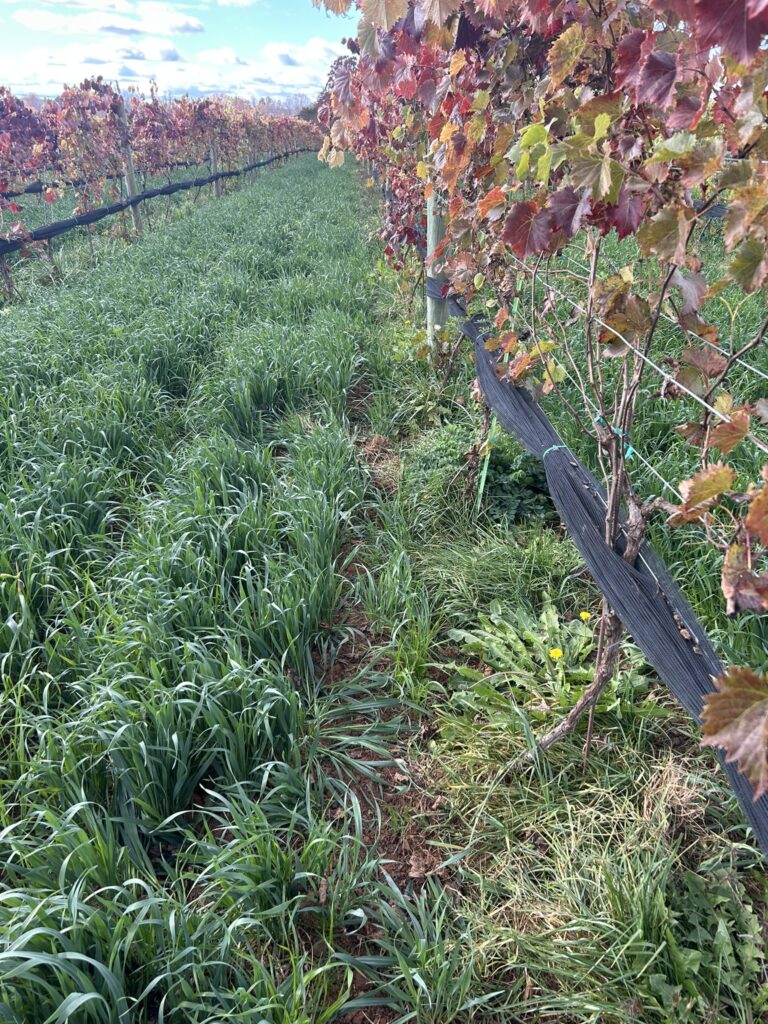
So, why go thru all that effort/expense instead of just leaving the native “cover crops” that are there? For our context, we are heavy clays and are heavily compacted for a variety of reasons – biology will not thrive in an oxygen deprived environment. Biology is the foundation of plant and soil health so that’s something we need to address if we’re going to ultimately rely on that for pathogen resistance and grape quality. The first couple pictures are rye/oat roots and you can see the rhizosheath that has formed – basically a nice mix of plant and biological excretions feeding each other. Oats and Rye should also be highly associative with beneficial fungal species which will increase their populations in the soil and hopefully start to associate with the vines. The last photo is from the volunteer “cover crop” under the vine and shows none of the same characteristics of the oats/rye. Had we of not gone through all this disturbance we would still be far behind where we need to be. Ultimately, we should be able to progress to a perennial system with the same benefits but we still have a ways to go.
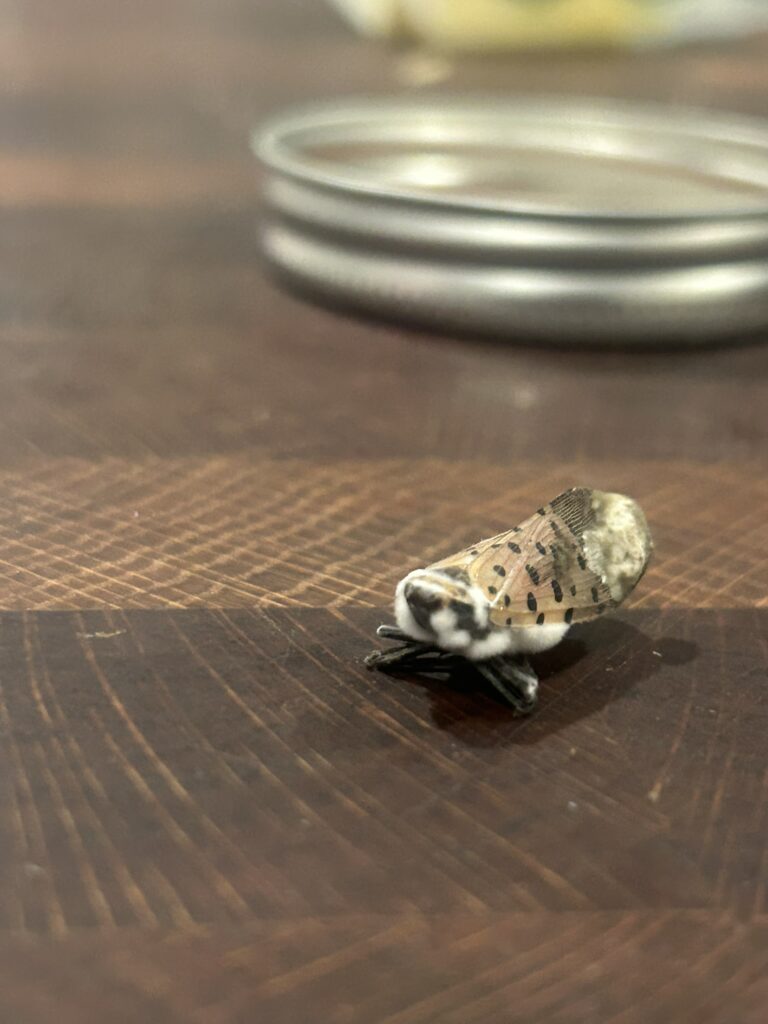
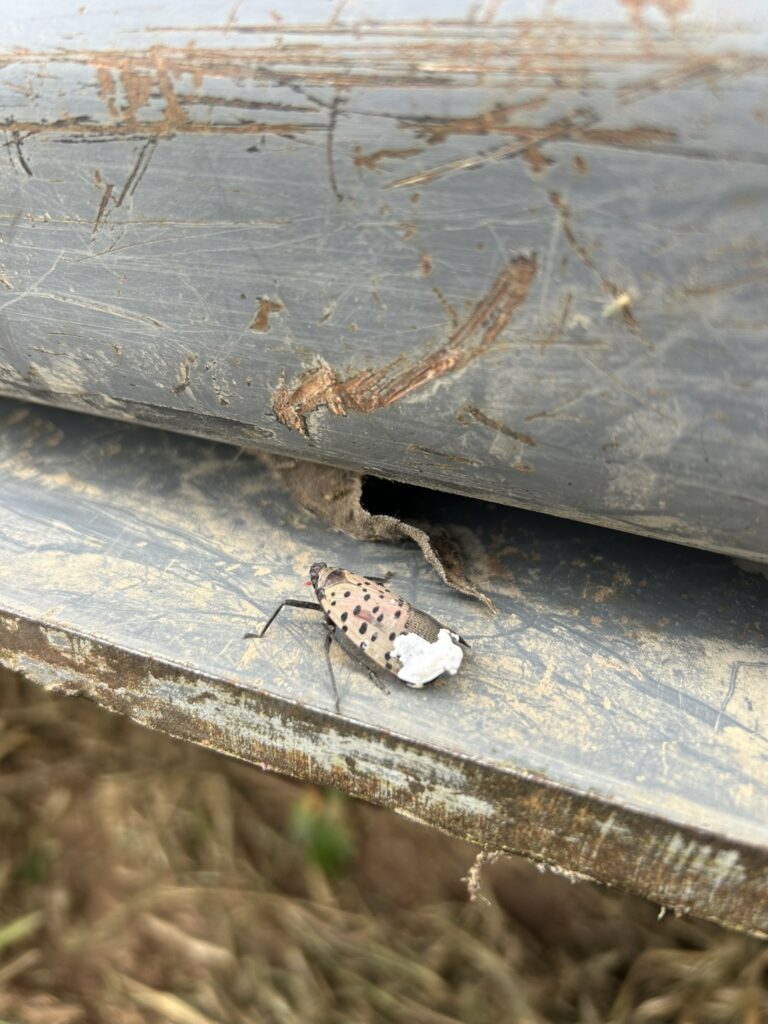
Another interesting development was observing this lantern fly that looks to be colonized by Beauveria Bassiana. We did spray a commercial product on one row as an experiment with that being the active ingredient so it’s most likely that however it was found a ways from the vineyard. Our hope is to propagate this fungi on site and be able to cheaply spray throughout the season to control lantern fly and potentially Japanese beetle if we can get the system down. There are commercial biological products but they can be cost prohibitive to spray at our scale.
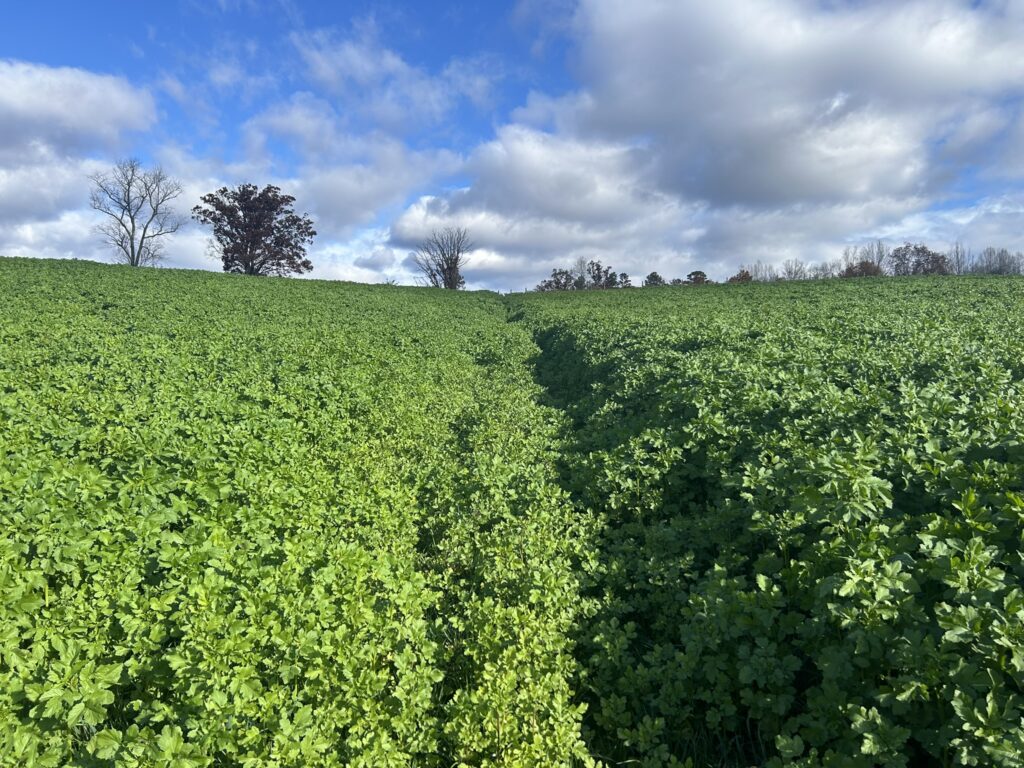
Finally, the last photo is ground we’re prepping to re-plant this spring. That’s been planted with mustard, black oats, annual rye and crimson clover. Waaayyyy more mustard than I intended but we’ll see how the rams like it…